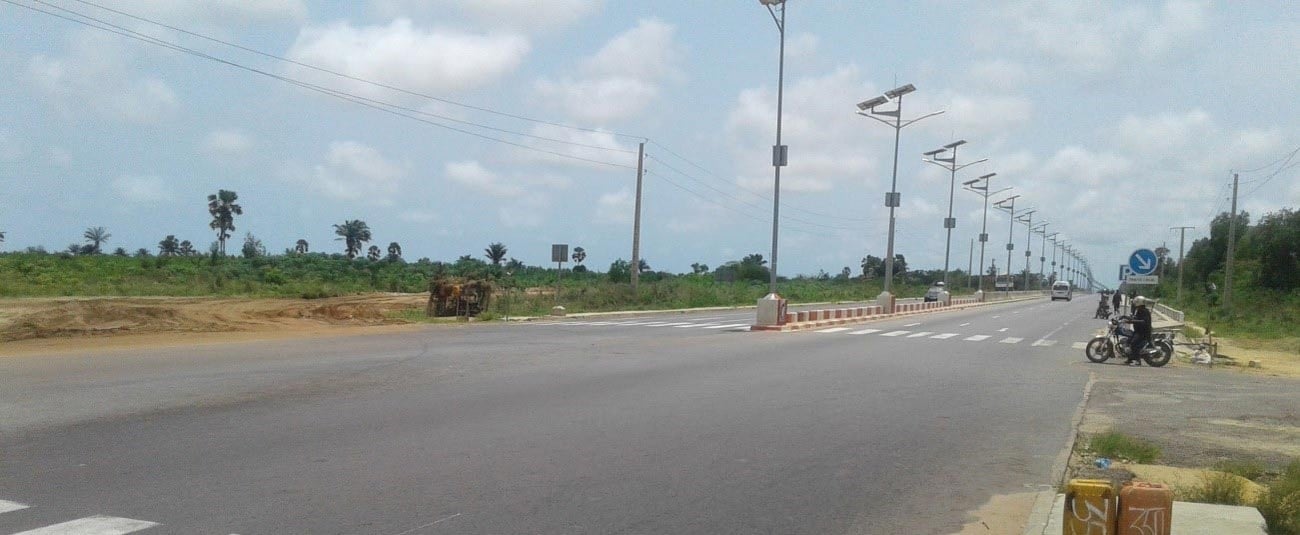
The first phase of the Project to Rehabilitate the Lomé-Cotonou Road and Facilitate Transport on the Abidjan-Lagos Corridor, completed in 2022, has opened up a large agricultural and fisheries production area.
The African Development Fund, the Bank Group’s concessional financing window, financed the project with a $63 million loan and a $63.35 million grant. It was launched in 2011.
“Ten years ago, it took almost two hours to travel the 76.3 kilometers between Pahou and Hillacondji. The journey now takes less than an hour since the completion of rehabilitation works on the road. Traffic flows much faster on the Benin section of the Abidjan-Lagos corridor,” explains Ismaël Amadou, coordinator of the Benin section of the project.
The smooth flow of traffic is attributable primarily to the completion of key infrastructure components of the project: construction of the 18.75-km-long 2×2 Pahou-Ouidah carriageway, development of 110 kilometers of rural tracks and construction of Juxtaposed Border Posts between Benin and Togo. These border posts, completed in October 2021, have significantly reduced the time freight trucks take to cross the border: now 13 hours and 50 minutes compared to 24 hours previously. Roadblocks have also decreased from seven in the past to only one after every 100 kilometers.
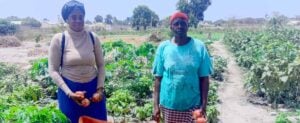
In Benin, the project area covers four districts in the south and southwest: Ouidah, Kpomassè, Comè and GrandPopo. The zone is mainly rural (80%), with agriculture and fishing as the main income-generating activities. The region accounts for 15% of Benin’s food products, dominated by cassava, tomatoes and pineapples.
Before the project, agricultural and fisheries productivity was hampered by a lack of appropriate processing facilities and limited access to production areas and markets due to the deplorable state of the road network. However, since the road was built, accessibility to the area has improved, positively impacting the local economy, transport safety, and poverty reduction.
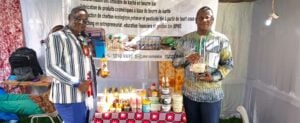
“Several women groups have received support to purchase equipment for processing agricultural products. Schools along the road have benefited from the construction of fences and latrines, while the localities have benefited from water wells. All these contribute to improving the population’s living conditions,” emphasizes Ismaël Amadou.
Project implementation was combined with desilting sewers and planting trees to limit the risk of flooding and provide a carbon sink.