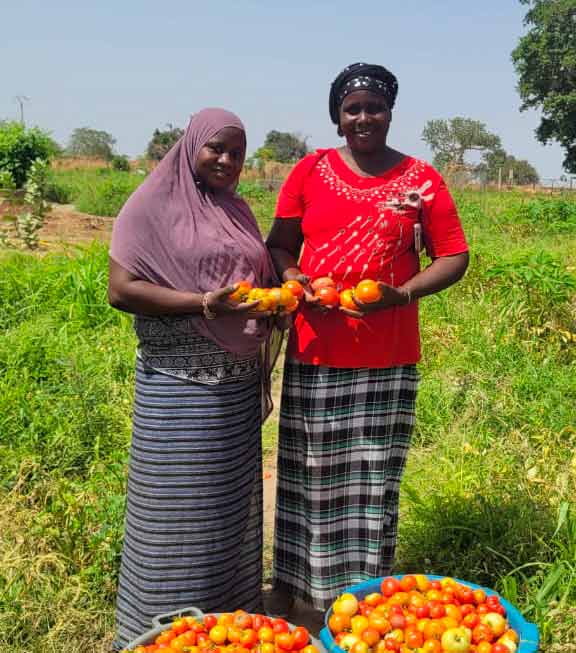
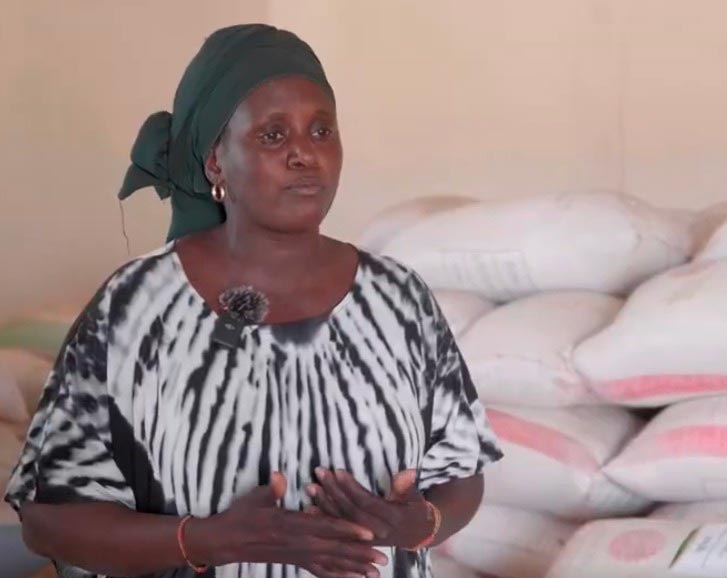
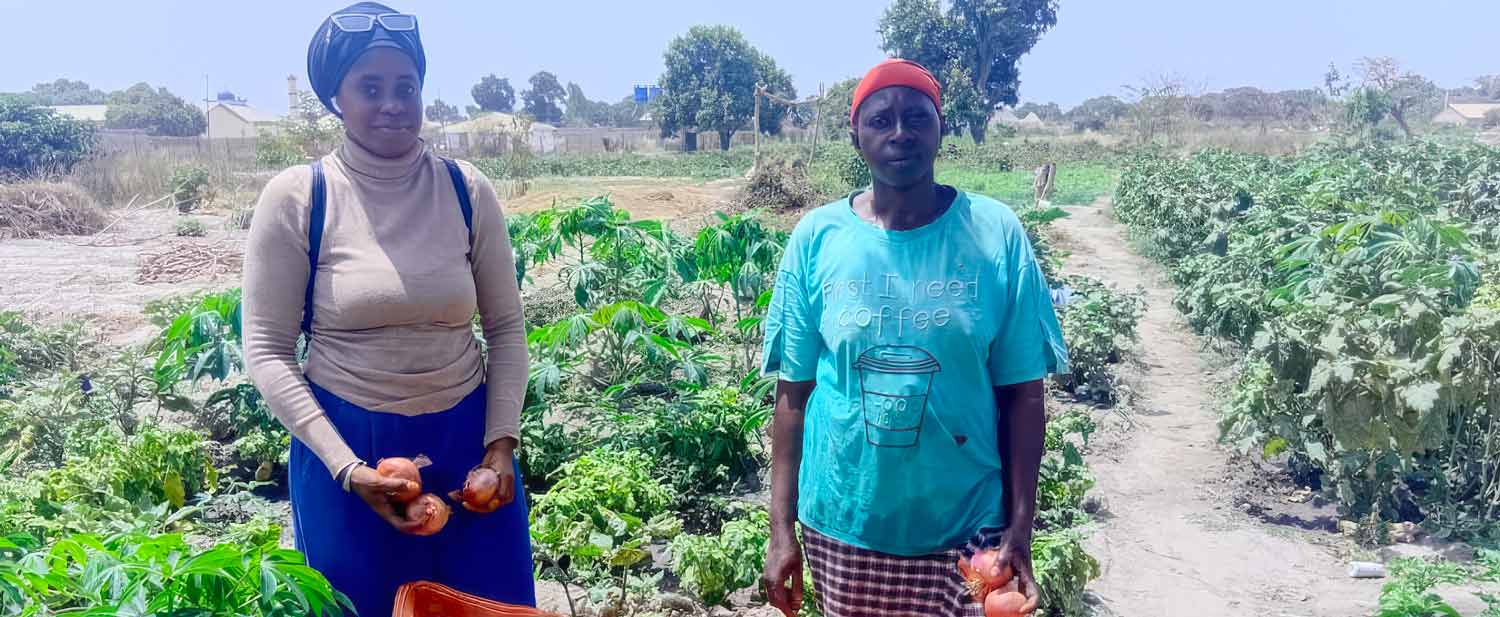
A country with a river running through it, fertile lowland, and women ready to work it. Yet it imports four-fifths of its staple food. Three farmers, one crop season, and what changes when investment finally arrives.
Some seasons, nothing holds. The fence gives way, the rains arrive wrong, the work of weeks disappears overnight. For women farming in The Gambia’s smallholder gardens and rice fields, that kind of season is not an exception. It is the pattern they have learned to brace for, and the reason that when something finally does hold, it means more than a harvest.
Abibatou Sonko had been here before – rows of onions carefully tended, then gone overnight. Goats had broken through the fence at the Tanji Women’s Garden Scheme, 32 kilometres south of Banjul, and taken what weeks of work had built. She and her fellow gardeners picked themselves up and started again; season after season. “Sometimes my womenfolk and I worked so hard and still lost almost everything,” she recalled. “It was discouraging for us, honestly.” There were moments, she admits, when she questioned whether continuing was worth the struggle.
This past season, she harvested 31 bags of onions. Not salvaged. Not reduced. Thirty-one bags, at roughly 1,000 Gambian dalasi (approximately $14) each; a total harvest worth around $435, representing several months of reliable household income in a community where such predictability is rare. Stacked beside the field she had refused to abandon, they were proof of something she had almost stopped believing in. The difference, she will tell you plainly, was the quality seeds she received through the P2-P2RS project. “Last year, goats destroyed my produce,” she said, standing beside the harvest, “but this year the quality seeds encouraged me to continue farming. Now I feel motivated again because I can see the results of our hard work.”
Her story sits inside a paradox that defines The Gambia. This is a country with a river running through its entire length, millions of hectares of potentially irrigable lowland, and fertile land, where women are willing to work it. And yet The Gambia imports roughly 81 per cent of the rice it eats, a staple consumed at 117 kilograms per person per year, more than twice the global average. The constraint has never been the soil. It has been seeds that do not perform; inputs that do not arrive fences that do not hold, and markets that offer no certainty. Abibatou’s goats are not a detail. They are a metaphor for everything that has stood between Gambian farmers and a harvest that holds.
That is what the investments now underway are designed to change, systematically, at scale, across the country. Under Project 2 of the Programme to Strengthen Resilience to Food and Nutrition Insecurity in the Sahel (P2-P2RS), a $17.75 million initiative co-funded by the African Development Fund (ADF), farmers across 19 districts in the Lower River, Central River, and West Coast Regions are gaining access to improved seeds, mechanised ploughing services, solar-powered irrigation infrastructure, and climate-smart inputs. For the first time in many of these communities, year-round cultivation is becoming a realistic prospect.
The P2-P2RS serves 67,200 direct and indirect beneficiaries. It is one of three major AfDB-funded agricultural programmes currently active in The Gambia, alongside the Regional West Africa Resilient Rice Value Chains Development Programme (REWARD), launched nationally in July 2025. It targets 8,000 households and 120,000 indirect beneficiaries with modern irrigation clusters, improved seed systems, and market linkages. Together, they represent the most concentrated agricultural investment the country has seen.
Why food security is The Gambia’s central challenge
Rice in The Gambia is not simply food; it is the measure of a household’s security. When rice runs short, everything else becomes harder: children miss school, women take in debt, families fracture under the pressure of scarcity. The gap between what the country consumes and what it produces is the lived pressure that shapes decisions in nearly every rural household.
The structural challenge is one of compounding constraints: dependence on rainfed agriculture in a country where rainfall is seasonal and increasingly erratic; limited access to certified seeds and inputs that actually perform under local conditions; inadequate post-harvest infrastructure that loses value between field and market; and the near-absence of reliable buyers that makes planning impossible.